
(When) “I’m Sorry” Isn’t Enough
Transformational Apologies Across Contexts

Apologies Aren’t Free
Knowing how and when to apologize seems, on the surface, like an easy task. I’ve often heard the idea that apologizing costs nothing, but I’m not so sure that’s true. If real harm or injury occurred, there was already a price paid. An apology, then, should acknowledge that cost. This isn’t about punishment or keeping score; it’s about meaningful reflection, learning, and doing differently.
I also know that girls and women are conditioned to apologize far more than men. In my own household, when my children begin a dramatic apology for a minor mishap, I often ask, “Is there blood?” It may sound extreme, but it’s a reminder that not every moment of discomfort requires an immediate apology. Sometimes what’s needed is acknowledgment, clarification, or a plan for next time. There are many ways to express remorse or regret without defaulting to those two words, and knowing the difference matters.
When an Apology Is Expected
As a school leader, I have apologized many times, sometimes because I genuinely made a mistake, and sometimes because I was expected to, even when I did not believe I had done wrong or when I was apologizing on behalf of someone else. In moments like those, when everyone is looking to you for an apology for a technical failure or a systemic issue that doesn’t warrant a personal “I’m sorry,” it becomes clear that not every situation can, or should, be repaired that way. I’ve become increasingly resistant to performative apologies, the kind offered simply to move past discomfort without real accountability or learning. When a student plagiarizes, or when a verbal disagreement escalates into a physical altercation, a reflexive apology often misses the point.
The Perception Gap
In the last few months, I’ve been curating my podcast listening, gravitating toward episodes that mirror situations I’ve experienced in my various administrative roles. One that felt uncomfortably familiar was the Women at Work podcast (Season 3, Episode 5, “Sorry Not Sorry”). In the episode, researchers Karina Schumann and Michael Ross unpack why women tend to apologize more often than men. It isn’t because women are more willing to admit fault. Instead, they describe a perception gap. Women often have a lower threshold for what they perceive as offensive behavior, interpreting the same actions as more severe than men do. Unsurprisingly, that leads to more frequent apologies.
That distinction helped me better understand a moment from the early days of COVID. I was working closely with Gabriel Grant, author of Breaking Through Gridlock and co-founder of Weaving Futures, while struggling to find common ground with someone affiliated with the school I worked for. Every interaction brought out the worst version of myself. At first, I brushed it off and even joked about it, telling friends I was “becoming” Jules Winnfield from Pulp Fiction, all sharp edges and barely contained frustration.
Eventually, though, it was exhausting to keep suiting up for those meetings. I found myself wondering: how could I just be me in that room? When Gabriel suggested that I apologize, I was certain I had misheard him.
It took many conversations, and honestly close to ten hours of reflection, before I could see what I could genuinely own. I began to recognize how my own behaviors and reactions were contributing to a dynamic that was far from productive. The apology itself ultimately cost me nothing in the way I had feared. What it gave me, however, was far more than I expected: clarity, repaired connection, and a deeper understanding of what a meaningful apology can actually do. It was, in a word, transformative.
From Reflection to Repair
Psychologist and author Beverly Engel, in The Power of Apology, outlines three essential components of an apology that truly supports healing and growth. First, the person apologizing must acknowledge the harm that occurred and express sincere regret, even when harm was not intentional. This includes recognizing the emotional impact and demonstrating empathy. Second, a meaningful apology requires taking responsibility without deflecting, minimizing, or shifting blame. Accountability must be clear and owned. Finally, an apology must include a commitment to repair through restitution, changed behavior, or concrete steps that demonstrate the harm will not be repeated. Without these elements, an apology becomes performative rather than transformative.
I see this most clearly in my own home. I use this approach with my own children as well. It may sound extreme, but I’ve found that it works. A few weeks ago, my youngest, who is eight, was a bit naughty. I didn’t ask him to write out the steps of a transformative apology, but we did talk about what happened. Then we talked about it again the next day. Each time he became resistant, we paused. I came back to it later. Over the course of four days, through a series of small, low-stakes conversations, he reached a place where he was ready to apologize and articulate a plan for what he would do differently if faced with a similar situation. I also asked whether he was ready to talk with the others involved. He answered honestly, “No.” So that’s where we left it. Maybe in a week he’ll want to revisit the conversation. Maybe he won’t. And that, too, felt like progress.
When working with students, I’ve found that transformative apologies align closely with restorative practices I try to employ around growth and discipline. Building on the work I began with Gabriel, I created a template that has proven helpful in supporting students through this process. This framework is not a magic wand. It doesn’t fix behavior forever. It is a starting point. Sometimes, the first apology a student needs to make is to themself. When students act out, it is often rooted in fear, shame, or a lack of confidence, and repair begins there.
A Very Public Apology “The Apology Song”
Colin Meloy, the lead singer and songwriter for The Decemberists, has shared that “The Apology Song” came out of a real moment: he sang it over the phone to someone in England as a way to apologize for having their bicycle stolen.
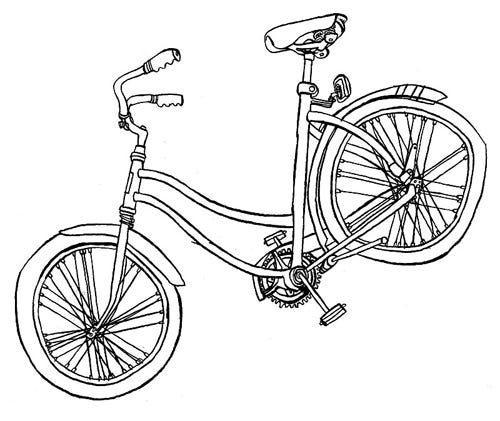
In a twist that feels almost too spot-on, Meloy later found the bike and returned it to its owner. In an even more ironic epilogue, he then accidentally crushed it while helping the same friend move.
What stands out isn’t just the apology itself, but the persistence that followed it. The repair didn’t end with the song. It continued in the act of searching for the bike, finding it, and returning it. Even though the story ends imperfectly, it reflects something true about repair: it’s rarely linear, often messy, and sometimes marked by both effort and missteps. In that way, the apology feels less like a performance and more like a process.
The Apology We Owe Ourselves
And sometimes, the apology that’s needed isn’t owed to anyone else at all. It’s owed to ourselves. We stay in situations too long. We accept treatment we shouldn’t for far longer than we need to. Naming that truth can be uncomfortable, especially for those of us who are practiced at extending grace outward but slower to offer it inward. An apology to oneself isn’t quick or performative. It takes time, patience, and a great deal of grace. I don’t pretend to have that one fully figured out yet, but when I do, I’ll let you know.
Brilliant piece on transformative apologies. The distinction between perfromative and transformative is key, especially the ten-hour reflection example that led to real clarity. I've been guilty of the quick "sorry" that bypasses actual accountability, thinking it saves time but realy just kicks discomfort down the road.
Another 💎! Thank you for the wisdom, reminders, redirection, and encouragement to stay on the path of thoughtful and reflective actions. The work continues:)